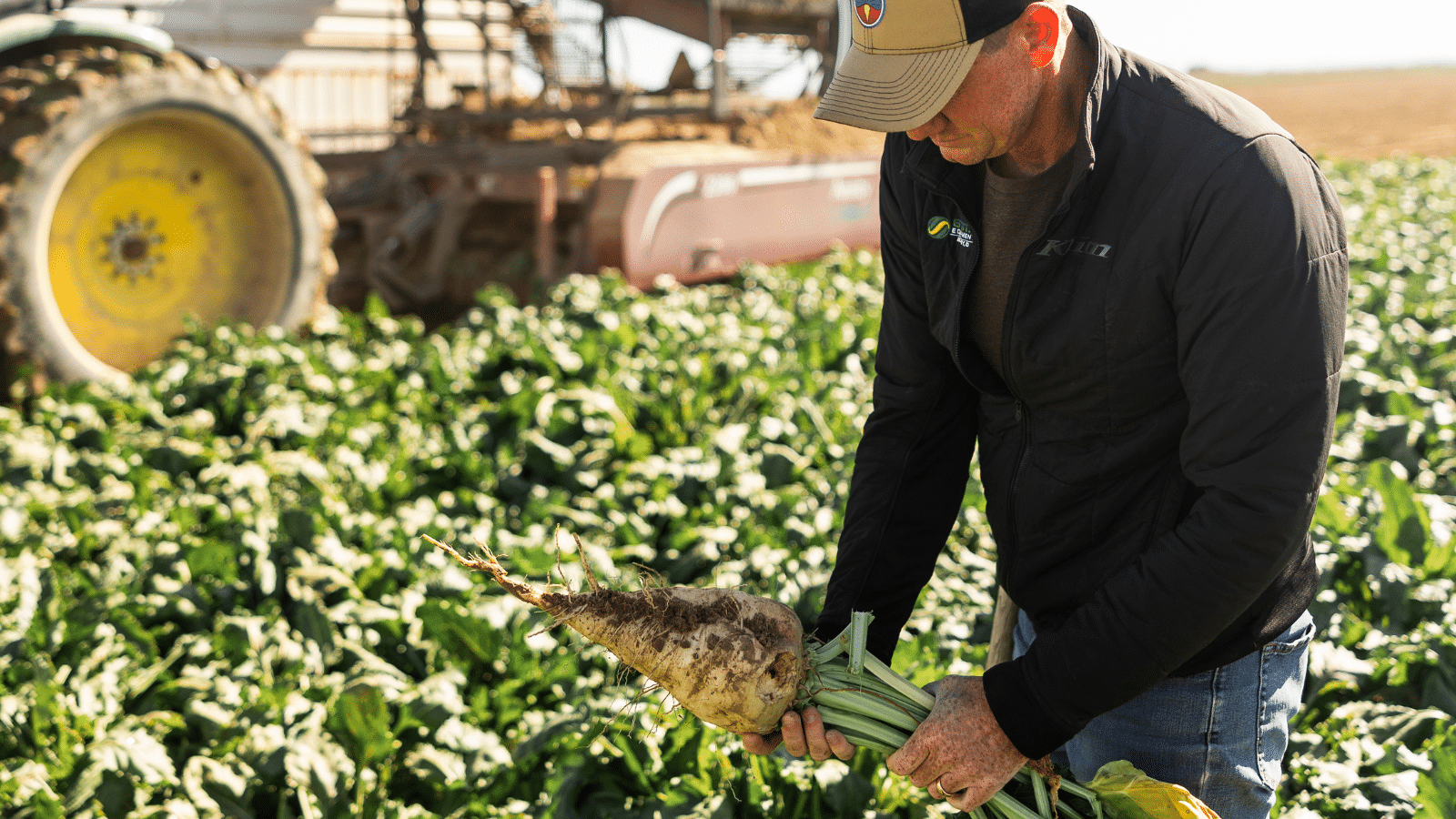
From planting to the harvest of a sugarbeet crop, each step feels like a chapter in a beautiful farming story. Sugarbeet farms can be found in California, Colorado, Michigan, Minnesota, Montana, Nebraska, North Dakota, Oregon, Washington, Wyoming and of course, Idaho! Sugarbeets not only provide a natural source of sweetness but also offer a rewarding experience for farmers. Let’s explore the essential steps for cultivating a bountiful sugarbeet harvest!
- Planting Seeds
Tiny sugarbeet seeds, about half the size of a pea, are planted in the spring in rows of loamy soil.
- Seedling Growth
Seedlings emerge about one to three weeks after a seed has been planted. Photosynthesis starts as soon as seedlings have emerged and are exposed to sunlight.
- Canopy Growth
The leafy canopy of the sugarbeet is essential to perform photosynthesis. Leaves consistently grow out in pairs, and their full size or “row closure” usually occurs in mid-summer. Once they are fully developed, the plant shifts from top growth (leaves) to root growth.
- Root Development
Through the process of photosynthesis, the sun’s energy is absorbed by the canopy and converted into sugar that is deposited in the root of the plant which acts as a storage system.
- Sugar Accumulation
At the end of the growing season, once sugar has accumulated in the root, sugarbeets are harvested, stored and transported to the factory for processing.
Get ready to sow the seeds of sweet success!